The Holidays Don’t Have to Be Hazardous – to Your Waistline

Home » Blog » The Holidays Don’t Have to Be Hazardous – to Your Waistline

To Your Health
November, 2015 (Vol. 09, Issue 11)

The Holidays Don’t Have to Be Hazardous – to Your Waistline

By Editorial Staff

Yes, it’s that glorious time of year again: six weeks of glorious indulgence, starting with Thanksgiving and rolling through New Year’s. Combine ample decadent treats with hectic shopping, end-of-the-year work deadlines and “I deserve to take a break” syndrome, and you’ve got a recipe for holiday weight gain that can undo your entire year of progress.

But don’t fret: Success can be yours with these tips to enjoy the holiday season without it being hazardous to your waistline.

    • Stay in the Zone: Exercise and diet are as important as ever over the holidays, if not more so, because you’ll surely succumb to at least a few treats at a holiday party or family gathering. And that’s OK – you didn’t get in shape with a Spartan lifestyle, but with moderation and consistency. So stay in the zone by staying consistent: enjoy the holidays, but don’t abandon the habits and dedication you’ve displayed for the past nearly-11 months. Don’t overeat. Don’t ignore the gym. Don’t “give up” when you’ve come so far.


    • Give a Gift (to Yourself): Stress can be the operative word around the holidays, for all the reasons mentioned at the beginning of this article (deadlines, shopping, etc.). And when it comes to weight gain, stress can be the trigger, biochemically and mentally. Stress triggers the production of cortisol, the so-called “stress hormone,” and cortisol can lead to weight gain, among other health issues. Stress also “weighs you down,” making you more likely to curl up on the couch with a gallon of ice cream than hit the gym. So give yourself a stress-relieving gift while you’re out shopping for family, friends and loved ones: a massage, a trip to the movies, or even just a long, hot, relaxing bath before bed can do wonders.

    •  Take It Step by Step: Your quest for health and wellness is an evolving journey, not a single leap; it’s a day-by-day, step-by-step  process. Use that same philosophy over the holidays to stay active, even when you find it difficult to stick to your standard exercise routine. Holiday shopping at the mall? Escape the packed lots by parking in an open space and walk to the stores, no matter the distance (within reason). Why drive around for hours attempting to find that open space up front when you can escape the stress – and get some exercise – by parking farther away? Family in town? Catch up on old times while taking a nature hike or walking around town.

The holidays don’t have to be hazardous to your waistline if you remember what you’ve been telling yourself all year long: I’m in control. Don’t lose control this holiday season, no matter how hectic things get. You’re in control, so stay strong and stay healthy – you deserve it. After all, your New Year’s Resolutions should never say, “Lose the weight I regained over the holidays” again.

itemscope itemtype=”http://schema.org/BlogPosting”>

The Holidays Don’t Have to Be Hazardous – to Your Waistline

The holidays don’t have to be hazardous to your waistline if you remember what you’ve been telling yourself all year long

Three Reasons to Choose Chiropractic

Home » Blog » Three Reasons to Choose Chiropractic

To Your Health
November, 2015 (Vol. 09, Issue 11)

Three Reasons to Choose Chiropractic

By Editorial Staff

When you’re suffering low back pain, shoulder pain or any number of similar musculoskeletal conditions, who gets the call: your medical doctor or your doctor of chiropractic? Your choice of health care provider in those situations could make a big difference, and research is continuing to prove it.

According to the latest study, chiropractic and pain management care is at least as effective as medical care for certain musculoskeletal conditions, while reducing health care costs and leaving patients more satisfied with the results.

The authors of the study, published in the Journal of Manipulative and Physiological Therapeutics (JMPT), went so far as to state that for certain musculoskeletal conditions, visiting an MD first instead of a DC may actually be a mistake:

“The findings of this study support first-contact care provided by DCs as an alternative to first-contact care provided by MDs for a select number of musculoskeletal conditions. Restrictive models of care in which patients are required to contact a medical provider before consulting a chiropractic provider may be counterproductive for patients experiencing the musculoskeletal conditions investigated and possibly others.”

easy - Copyright – Stock Photo / Register Mark

The study sample included 403 patients who saw medical doctors and 316 patients who saw doctors of chiropractic as the initial health care providers for their spinal, hip or shoulder pain complaint. Four months following care, all patients completed a questionnaire that evaluated pain on that day and four months earlier (11-point scale); satisfaction with care received and the results of that care (5-point scale from “very satisfied” to “very unsatisfied”); and other variables. The researchers evaluated related costs of care by reviewing an insurance claims database.

“Patients initially consulting MDs had significantly less reduction in their numerical pain rating score and were significantly less likely to be satisfied with the care received and the outcome of care.” What’s more average per-patient costs over the four-month period were significantly lower in patients who initially consulted DCs ($368 difference compared to MD care).

JMPT Editor-in-Chief Claire Johnson, DC, MEd, emphasized the importance of the latest findings: “Comparative studies – in other words, research that compares the outcomes between two different providers or modalities – are rare for chiropractic care,” she said. “Thus, this study … is especially important if payers and policy-makers are to better understand the ‘triple aim’ as it relates to chiropractic. Specifically, this study helps us better understand what type of care provides better patient satisfaction, is more cost effective, and improves population health.”

The answer, suggests an increasing body of research, is chiropractic care.

itemscope itemtype=”http://schema.org/BlogPosting”>

Three Reasons to Choose Chiropractic

Learn about the three reasons why you should choose chiropractic care

Workplace Stress Can Be Deadly

Home » Blog » Workplace Stress Can Be Deadly

To Your Health
October, 2015 (Vol. 09, Issue 10)

Workplace Stress Can Be Deadly

By Editorial Staff

We all experience stress in our jobs, even if we’re working at our “dream job.” That’s because every job entails a certain amount of responsibility. Unless you don’t care a bit about your job – in which case, you won’t be employed much longer – you make every effort to fulfill your responsibilities; and that can cause stress, particularly when you’re “under the gun” in terms of a project, deadline, presentation, etc.

Workplace stress also can manifest because your job is your source of income, and the prospect of losing that income (which in most cases, is always a threat, whether real or perceived) can be frightening. Add in the sometimes-contentious interactions with your boss, co-workers and other parties with whom you interact, and that stress can simmer slowly or boil over in a moment’s notice.

work stress - Copyright – Stock Photo / Register Mark

But can stress actually be deadly? Yes, suggests a recent review study by Stanford University and Harvard Business School that evaluated the impact of 10 workplace stressors (including some of the stressors discussed above) on four health outcomes. After analyzing 228 studies, the researchers found “job insecurity increases the odds of reporting poor health by about 50%, high job demands raise the odds of having a physician-diagnosed illness by 35%, and long work hours increase mortality by almost 20%.”

Most people have enough stress in their lives – add workplace-related stress and you could be concocting a recipe for disaster. Two solutions: Find ways to better manage the sources of stress (so you don’t experience stress int he first place; or learn how to reduce the impact stress has on you when it inevitably rears its ugly head. Click here for some simple stress-management strategies to help get you started.

itemscope itemtype=”http://schema.org/BlogPosting”>

Workplace Stress Can Be Deadly

We all experience stress in our jobs, even if we’re working at our dream job

Keep Your Spine in Shape

Home » Blog » Keep Your Spine in Shape

To Your Health 

October, 2015   (Vol. 09, Issue 10)

Keep Your Spine in Shape

By Editorial Staff

Your spine is the backbone of your entire body – literally and figuratively. That means poor spine health can negatively impact you from head to toe. How can you keep your spine in shape? Let’s learn more about this critical anatomical structure and take a look at some of the simple strategies you can employ to ensure a healthy spine and a healthy body.

Sleep Matters: Your sleep position and the overall quality of your sleep play a big role in spinal health. The ideal position for the spine during sleep places you on your back with a pillow between your legs. As you might imagine, lying on your stomach is the worse position. Your pillow and mattress also matter, so make sure you choose the right ones for you, or your spine will let you know with neck and/or back pain. (Talk to your chiropractor for suggestions.)

healthy spine - Copyright – Stock Photo / Register Mark

Nutrition Essentials: Believe it or not, certain foods promote a healthy spine (and vice versa). For example, adequate water intake is necessary to nourish not only the body’s cells, but also the spinal intervertebral discs, which consist primarily of water at birth. As you might imagine, water helps keep the discs (and thus the spine) from getting stiff and subject to injury.  In addition, an anti-inflammatory diet is key to preventing back pain and other spine problems due to inflammation. Think foods such as omega-3 fish and lean proteins, fresh produce, avocado, olive oil, and various spices while reducing intake of pro-inflammatory foods (most fast foods and processed foods, sugar-laden sweets, etc.).

Chiropractic Care: No conversation about spine health would be complete without mentioning chiropractic, an entire health care profession founded on the principle that a healthy, properly aligned spine has far-reaching effects on the entire body. Research asserts chiropractic’s effectiveness in treating back pain, neck pain and various other musculoskeletal conditions, and the goal of periodic chiropractic care is to maintain spinal health, optimize the body’s self-healing capacities, and thus prevent pain from returning. If you haven’t been to a chiropractor yet, what are you waiting for? If you’ve visited one, but haven’t returned in awhile, remember: your spine – and your entire body – deserve it.

itemscope itemtype=”http://schema.org/BlogPosting”>

Keep Your Spine in Shape

Your spine is the backbone of your entire body – literally and figuratively

Less Sleep = More Colds

Home » Blog » Less Sleep = More Colds

To Your Health
September, 2015 (Vol. 09, Issue 09)

Less Sleep = More Colds

By Editorial Staff

You’re not getting enough sleep, night after night, but you continue to push it, hoping it won’t do any harm. Then cold season hits, and you find yourself getting even less sleep because you come down with more colds than usual.

It’s a vicious cycle you can’t seem to escape: lack of sleep, cold, lack of sleep, another cold. Is there a connection? Definitely, according to a recent study that suggests people who sleep less than six hours a night are more likely to catch the common cold than people who get more sleep nightly.

In the study, published in the journal Sleep, researchers tracked 164 men and women for a week, monitoring their sleep patterns. At the same time, they exposed all study participants to the rhinovirus, better known as the common cold. Results showed that while only 18 percent of participants who more than six hours nightly contracted a cold, 39 percent who slept less than six hours did. On average, sleeping less than six hours a night made participants more than four times more likely to contract the rhinovirus compared to participants who slept seven hours or more.

colds - Copyright – Stock Photo / Register Mark

In an article on CNN.com, Shalini Paruthi, director of the Pediatric Sleep and Research Center at Saint Louis University, summed up the research findings: “It looks like an adequate amount of sleep allows our body to mount a better immune response.”

Having trouble sleeping? More colds may be on the way this fall (and all year round). Click here to learn more about the health benefits of adequate sleep and how you can ensure you get restorative, rejuvenating sleep tonight– and every night.

itemscope itemtype=”http://schema.org/BlogPosting”>

Less Sleep = More Colds

Results showed that while only 18 percent of participants who more than six hours nightly contracted a cold…

5 Common Causes of Neck Pain (and How Chiropractic Can Help)

Home » Blog » 5 Common Causes of Neck Pain (and How Chiropractic Can Help)

To Your Health
September, 2015 (Vol. 09, Issue 09)

5 Common Causes of Neck Pain (and How Chiropractic Can Help)

By Editorial Staff

Neck pain can be acute (short term) or chronic (recurring or persisting for months and even years), but regardless, when you’re in pain, relief is the first thing on your mind. Just as important as relief, of course, is finding the cause and ensuring you avoid the behavior / action that brought the pain on in the first place.

Here are five common causes of neck pain – and why doctors of chiropractic are well-suited to relieve the pain and determine the underlying cause.

1. Poor Posture: Leaning over a desk all day or slouching in your office chair? You’re bound to develop neck pain eventually, if you haven’t already. Do this quick test: In an upright or seated position, round your shoulders and back (poor posture). Does it impact your neck as well? Exactly!

2. Monitor Madness: Staring at the computer screen for hours at a time? That’s not good for your health (or sanity), but from a neck pain perspective, it’s madness, particularly if the screen height forces you to crane your neck up (too high) or extend it down (too low).

3. Sleep Issues: Ideally, we spend a third of our day sleeping, so your sleep habits – for better or worse – can have a dramatic effect on your health. With regard to neck pain, anytime you sleep in an uncomfortable position, particularly one that stresses your neck musculature (think about side-sleeping while grabbing your pillow tightly, sleeping on your stomach with your arms out in front of you, or even sleeping on your back, but with a pillow that doesn’t adequately support your neck), you risk neck pain.

neck pain - Copyright – Stock Photo / Register Mark

4. Technology Overload: We may spend a third of our day sleeping, but we increasingly spend the other 16 hours typing, texting, tapping and otherwise interacting with our smartphones, tablets, etc. Bottom line: bad for your neck. One doctor has even coined the phrase, “text neck,” to describe the neck pain that can result from this constant technology interaction.

5. The Wrong Movement: Twisting, turning, stretching and stressing your neck is an easy way to cause neck pain. While the muscles in the neck are strong, they can be strained, sprained and even torn, just like any other muscle.

It’s important to note that beyond these common causes, various other health issues can also contribute to or directly cause neck pain, including fibromyalgia, cervical arthritis or spondylosis (essentially spinal arthritis), spinal stenosis (narrowing of the spinal canal), infection of the spine, and even cancer. The good news is that a doctor of chiropractic can help identify which of these or the above causes is to blame.

When neck pain strikes, most people turn to a temporary solution first: pain-relieving medication. But that’s not a permanent solution, of course, and it doesn’t address the cause of the pain at all, which could be something relatively minor – or more serious. What’s more, research suggests chiropractic spinal manipulation is actually more effective than over-the-counter and prescription medication for relieving both acute and subacute neck pain.

Suffering from neck pain? Then give your doctor of chiropractic a call. They’ll help you relieve your pain and determine the cause so it doesn’t return.

5 Common Causes of Neck Pain (and How Chiropractic Can Help)

When neck pain strikes, most people turn to a temporary solution first: pain-relieving medication…

School’s Back in Session (Here’s How to Survive It)

Home » Blog » School’s Back in Session (Here’s How to Survive It)

To Your Health
August, 2015 (Vol. 09, Issue 08)

School’s Back in Session (Here’s How to Survive It)

By Editorial Staff

Depending on where you live, the school year’s just begun or is right around the corner. Yes, another year of learning and growth for the entire family – a point often overshadowed by what many consider a patience-testing, stress-magnifying nine-plus months.

Fortunately, simple strategies can streamline the school year and help you keep your sanity through it all. Here are five to consider:

Lesson #1: A Little Preparation Goes a Long Way. The key to surviving the school year is preparation, and plenty of it. Just as it’s important to prepare for a big test, not just cram the night before, you need to prepare in advance for each school week – and then each successive school day – so you aren’t running around with your head cut off. Test Tip: Spend Sunday night prepping meals for the entire week, including school lunches, snacks and dinners. Every night, get food, clothes, etc., in order so when morning comes, it’s (fairly) smooth sailing.

Lesson #2: Enlist an Army of Helpers. By the way, when you’re doing all that weekly and nightly preparation, why not enlist the rest of the family – from the youngest child to the oldest – to help? Teaching moments aren’t just that; they also help get things done by expanding the pool of people who can chip in. Test Tip: From food preparation to picking out clothes, teach your children the value of working together and making things easier, not harder.

school kids - Copyright – Stock Photo / Register Mark

Lesson #3: Stick to the Schedule. During the school year, a schedule is absolutely vital to survival. Drop-off and pick-up times, homework priorities, bath scheduling – try to wing it and you’ll end up walking the stress plank day after day. Test Tip: Post a daily / weekly schedule in a prominent location. Cross off events / responsibilities as they’re completed. For adults, keep a version on your smartphone, and teach phone-enabled children to do the same.

Lesson #4: Celebrate the Small Stuff. The school year is all about routine, which can weigh even the best of us down. Day after day of get ready for school, go to school, come home from school, go to practice, come home from practice, do homework, etc., can be mind-numbing. How can you break the monotony? By celebrating the small stuff. Test Tip: In the midst of the madness, take time to celebrate a good grade, a great day, and all manner of “trivial” accomplishments by the family. You all deserve it – and they’re not trivial at all!

Lesson #5: Make Vacation Days Count. You’ve finally hit your first day without school, whether because of a teacher planning day or a national holiday. What to do? For many people, the first though is, let’s do nothing! A day without a plan has its benefits, but with so much going on every other day, why waste it? Test Tip: Whether a trip to the local amusement park, a casual lunch or a movie, make your days off count. You’ve all been working so hard – give yourself the reward you deserve and motivate everyone to make it to the next vacation day alive and well.

Pain: A Global Epidemic That Requires a Global Solution

Home » Blog » Pain: A Global Epidemic That Requires a Global Solution

To Your Health
August, 2015 (Vol. 09, Issue 08)

Pain: A Global Epidemic That Requires a Global Solution

By Editorial Staff

More people may be living longer, but they’re not enjoying it, particularly when it comes to musculoskeletal health, according to the latest Global Burden of Disease (GBD) study.1 The largest analysis of global disability data to date, GBD 2013 reveals that “the burden of musculoskeletal disorders [is] much larger than previously appreciated,” accounting for nearly 21 percent of global years lived with disability as of 2013.

Led by the Institute for Health Metrics and Evaluation and funded by the Bill and Melinda Gates Foundation, GBD 2013 represents a massive analysis of global disability data, with 35,000 data sources spanning 188 countries.2 Here are a few of the key findings from the latest analysis, published in Lancet in June, highlighting the global musculoskeletal disability burden:

The Musculoskeletal Burden

  • “In this analysis, we show that musculoskeletal disorders ranged from 9.6% of YLDs [years living with disability] to 28.9% of YLDs between 188 countries. Low back pain was the leading cause of YLDs in 86 countries and the second or third leading cause in 67 countries.”
  • “Musculoskeletal disorders combined with fractures and soft tissue injuries reached a total of 20.8% of global YLDs in 2013 … Our analysis of time trends showed that this category of disorders was an important driver of rising YLD rates per person. Increases were driven by ageing of the population in most countries with trends in obesity and physical inactivity likely exacerbating the problem. Musculoskeletal disorders were not only an important contributor to the burden of disease but were also a crucial component of health expenditure in many high-income and middle-income countries.”

Nonmusculoskeletal Burden

While back pain maintains the No. 1 position in terms of its impact on years living with disability, diabetes now occupies the No. 7 spot, moving up three positions from 1990 to 2013. In the U.S. alone, diabetes prevalence increased 71 percent over that time period.2 What’s more, almost a quarter of the global population suffers from tension headaches, while one in eight suffers migraines.3

From Analysis to Action?

Will data drive health-care decision-making? Comments by the GBD 2013 collaborators and other health policy experts suggest something has to give:

The GBD 2013 authors emphasize, “Although the GBD 2010 analysis brought more attention to these disorders, there remains little policy discussion of the options available to prevent and address these disorders.”1

Rifat Atun, professor of global health systems and director of the Global Health Systems Cluster at Harvard University’s T.H. Chan School of Public Health, authored a commentary to the latest Lancet report and urges adoption of a prevention and wellness model to as a vital step to address the chronic disease burden:

“Don’t wait for illness, invest in the maintenance of health,” he said. “We can’t manage these chronic conditions in hospitals, so there needs to be an emphasis on maintaining good health, preventing disease and slowing progression of disease when it does happen. There’s no choice; it has to happen.”4

If you’re interested in reviewing the complete report, GBD 2013 provides the latest trends in disease and injury incidence, prevalence, and years lived with disability for 301 acute and chronic diseases and injuries in 188 countries – but be prepared. Reporter John Ross perhaps sums up the grim findings best:

“A focus on cheating death rather than keeping people healthy has transformed the planet’s population into a world of walking wounded, a massive inventory of global illness levels has found. … Premature death rates are in decline. But the death toll has been replaced by a colossal disability burden, with hundreds of millions of years of productive life lost each year to pain and disease.”5

Are you suffering back or other pain that’s reducing your quality of life? If so, you’re obviously not alone. Fortunately, doctors of chiropractic can help relieve your back pain – and help prevent its return – in addition to managing a host of other musculoskeletal and nonmusculoskeletal health issues without drugs or surgery.

References

  1. Vos T, Barber RM, Bell B, et al. Global, regional, and national incidence, prevalence, and years lived with disability for 301 acute and chronic diseases and injuries in 188 countries, 1990–2013: a systematic analysis for the Global Burden of Disease Study 2013. Lancet, epub ahead of print June 8, 2015.
  2. Tavernise S. “Global Diabetes Rates Are Rising as Obesity Spreads.” New York Times, June 8, 2015.
  3. Macrae F. “Back Pain Is the Biggest Cause of Ill Health in the World: Issues Cause More “Years Lived With Disability” Than Any Other Condition.” Daily Mail, June 8, 2015.
  4. Coghlan A. “Defying Death Is Causing Back Pain, Bad Teeth and Depression.” New Scientist, June 8, 2015.
  5. Ross J. “Illness Study a ‘Call to Arms.'” The Australian, June 9, 2015.

Give Yourself a Natural Energy Boost

Home » Blog » Give Yourself a Natural Energy Boost

To Your Health
July, 2015 (Vol. 09, Issue 07)

Give Yourself a Natural Energy Boost

By Editorial Staff

Energy can be a tricky thing – some days you have it, some days you don’t. Countless factors can affect your energy levels throughout the day, week to week and even longer term. Fortunately, in the absence of an underlying health condition, there are simple strategies to ensure you’ve got energy when you need it – which in general, means all the time.

Here are some great natural energy boosters to raise you up when you’re feeling low:

1. Stress Less: Easier said than done, right? Stress, particularly chronic stress, may be the No. 1 cause of low energy. Why? Because all your available energy – physical, mental, emotional – is occupied by whatever’s got you stressed out – your relationship, your finances, your job, etc. And stress leads to all the other energy drainers mentioned below: poor diet, lack of exercise and sleep issues. The Fix: Yes, “Stress less” is still the solution. Here are some great ways to reduce stress and boost your energy levels in the process.

2. Rethink Your Diet: Many people don’t have a clue that what they eat has a direct and dramatic impact on their energy levels. The main culprits: eating too much, eating too much sugar / simple carbohydrates or not eating enough, particularly of the right foods. All three lead to low blood sugar levels, making you feel sluggish and drained. The Fix: Eat less carbs, more protein, and low-GI foods (vegetables included) that give you sustained energy throughout the day. Eat something every 3-4 hours to avoid blood sugar depression.

energy boost - Copyright – Stock Photo / Register Mark

3. Less Butt, More Feet: This isn’t as funny as it sounds; exercise (or lack of it) has a profound impact on energy. Interestingly, while many people (usually non-exercisers) fear exercising because they believe it will expend too much energy, it actually has the opposite effect. The Fix: In the short term, exercise energizes; in the long term, particularly as you drop pounds, tone and tighten, and start to see results, it can be downright motivating. What’s more, physical activity increases your metabolism – the body’s ability to burn calories at rest. Now that’s energy in action.

4. Recharge: Sleep is the mechanism by which the body and mind refresh, recharge and revitalize. Unfortunately, even people who think they’re getting enough sleep probably aren’t. Watching TV or checking your emails for an hour before bedtime, waking up multiple times, or tossing and turning because of an improper mattress / pillow, sets the stage for disturbed, disrupted and interrupted sleep. Nothing worse for your energy levels than a night of poor sleep. Even worse when it happens night after night. The Fix: Take these steps to ensure you get a good night’s sleep every night, and watch your energy levels soar.

Death by Sugar (Sweetened Beverages)?

Home » Blog » Death by Sugar (Sweetened Beverages)?

To Your Health
July, 2015 (Vol. 09, Issue 07)

Death by Sugar (Sweetened Beverages)?

By Editorial Staff

Sugar-sweetened soft drinks, fruit juices and other beverages represent a growing health danger that goes far beyond simple cavities and poor energy; a recent analysis suggests regular consumption of sugary drinks can indirectly lead to death– yes, death.

Sound far-fetched? Not really, and here’s why: According to the researchers, who analyzed data from studies investigating the impact of sugar-sweetened beverage intake on body-mass index (BMI) and diabetes – and the resulting impact of BMI on cardiovascular disease and cancer, nearly 200,000 deaths worldwide can be attributed to drinking sugar-sweetened beverages. And that’s nearly 200,000 deaths every year. Specifically, the researchers estimated that consumption of sweetened drinks contributes to 133,000 deaths from diabetes, 45,000 from cardiovascular disease, and 6,450 from cancer on an annual basis.

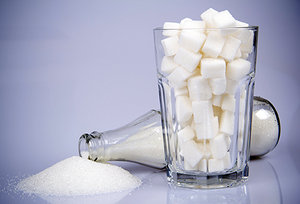
sugar - Copyright – Stock Photo / Register Mark Sure, the researchers don’t establish a direct connection, but keep in mind two things: 1) Excess sugar intake is associated with higher BMI and diabetes risk, while higher BMI and diabetes are risk factors for more serious health conditions and mortality; and 2) Their analysis wasn’t a small one; they relied on data from 62 national dietary surveys and more than 600,000 people over a 30-year period.

Need any more reason to stay away from the sugar when you’re thirsty this summer? Click here to learn more about the dangers of sugar-sweetened beverages, and here to discover the benefits of the alternative simple glass of water.