Treadmills Need Not Apply: How to Stay Fit Outside the Gym

Home » Blog » Treadmills Need Not Apply: How to Stay Fit Outside the Gym

To Your Health
June, 2015 (Vol. 09, Issue 06)

Treadmills Need Not Apply: How to Stay Fit Outside the Gym

By Julie T. Chen, MD

For those of us who are always on the run, finding time to exercise can be a challenge. While work, school and day-to-day stresses are a part of life, it can be tough to climb out of bed early and hit the gym; or prioritize an evening yoga class after a long day.

I often hear patients in my integrative medicine clinic complain about being too tired to work out or unable to squeeze gym time into their hectic schedules.

I always remind my patients that exercise doesn’t just happen in a gym, nor does it require the “right” workout clothes or shoes. Exercise can take place at any time of the day, as long as you’re open to changing up your regular routine and getting creative with it. Even a few extra minutes of movement per day promotes blood flow and will affect your energy levels and mood. Here are five tips on incorporating daily movement into your life in ways that are both practical and enjoyable.

1. Shake It Out: The next time you’re watching TV, challenge yourself to do jumping jacks during a commercial break. Mute your TV and put on your favorite music, do as many push-ups or sit-ups as you can, dance around, or even just jump in place. Worry less about doing the moves wrong and more on enjoying yourself. There is no wrong way to move!

exercise - Copyright – Stock Photo / Register Mark

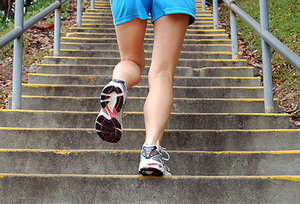
2. Count Your Steps: Try taking the stairs instead of riding the elevator when you get the chance, especially if you’re only going up or down a few floors. If you work in a building with many floors, hop off the elevator a few floors before your own and walk the rest of the way up/down.

3. Stop and Smell the Roses: Instead of driving somewhere to grab lunch, go green and walk to a nearby café or restaurant. If you bring your lunch with you, don’t settle for sitting inside a cafeteria – briskly walk to the nearest park or green space and enjoy your lunch outdoors. Not only will you get your daily requirement of vitamin D, but you’ll also have the energy to power through the rest of your workday.

4. Change Your Pace: If you’re the type who circles around the shopping mall looking for the closest parking spot, switch up your routine and get in the habit of parking far away. Not only will you find a spot with ease, but you’ll also get a workout, particularly if you’re toting shopping bags.

5. Back to Basics: If getting to the gym is deterring you from working out, remember exercise is literally around the corner. Whether you live in the middle of the city or out in the suburbs, taking a stroll around the block only requires you to put shoes on and walk out the door. Put on your favorite playlist or podcast and set a timer if you’re short on time, and remember: You can be active anywhere as long as you prioritize it in your daily schedule.


Dr. Julie T. Chen is board-certified in internal medicine and fellowship-trained and board-certified in integrative medicine. She has her own medical practice in San Jose, Calif. She is the medical director of corporation wellness at several Silicon Valley-based corporations, is on several medical expert panels of Web sites and nonprofit organizations, is a recurring monthly columnist for several national magazines, and has been featured in radio, newspaper, and magazine interviews. She incorporates various healing modalities into her practice including, but is not limited to, medical acupuncture, Chinese scalp acupuncture, clinical hypnotherapy, strain-counterstrain osteopathic manipulations, and biofeedback. To learn more, visit www.makinghealthyez.com.

Raise Your Hand If You Have Back Pain

Home » Blog » Raise Your Hand If You Have Back Pain

To Your Health
June, 2015 (Vol. 09, Issue 06)

Raise Your Hand If You Have Back Pain

By Editorial Staff

As adults, we get used to a variety of daily or near-daily aches and pains, particularly as we age. But what about our children? Don’t they seem immune to many, if not all, of the pain complaints we have – despite the fact that for the most part, they’re exponentially more active?

Maybe not. A study of schoolchildren ages 12-15 revealed a startling statistic: More than half (57 percent) reported experiencing back pain in the past year. As you might expect, “remaining seated at school” was a primary pain trigger, particularly for back pain lasting up to seven days.

These findings not only point to the universality of back pain – and the need for it to be addressed by qualified health care professionals such as doctors of chiropractic; but also the need to recognize and avoid situations that may increase the risk of experiencing an episode of back pain.

back pain - Copyright – Stock Photo / Register Mark

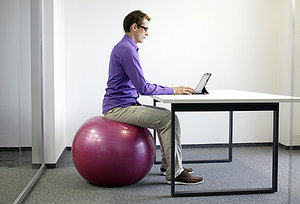
For example, evidence implicates ergonomic flaws both in the school and workplace (desk / chair height, etc.) in back pain, not to mention carpal tunnel syndrome, neck pain and other conditions. What’s more, the act of sitting alone creates undue stress on the spinal column and encourages poor posture whether at school, work or home, a major initiator of back pain and related conditions.

If anyone in your family is suffering from back pain, do something about it. Talk to your doctor about the potential causes and solutions.

Keep Obesity Out of the No. 1 Spot

Home » Blog » Keep Obesity Out of the No. 1 Spot

To Your Health
May, 2015 (Vol. 09, Issue 05)

Keep Obesity Out of the No. 1 Spot

By Editorial Staff

Behind smoking, obesity is the leading cause of preventable death in the United States – and the way we’re going as a nation, it soon might be No. 1. Here are four easy ways to make sure you or someone you know doesn’t end up a statistic.

It’s a daily plan to improve your life by keeping your weight at a healthy level.

1.  Motion Matters: You can’t beat exercise when it comes to weight management, and for two simple reasons that bear constant repeating: 1) The more calories you burn, the more weight you’ll lose; and 2) muscle feeds metabolism, which burns calories even when you’re not doing anything (even while you’re sleeping). Plus, the more you exercise, the less time you have to sit on the couch, snacking on obesity-promoting chips, sweets and other nutrient-deficient foods.

Action Step: Don’t think you have time to exercise regularly? Here’s a simple strategy for sitting less and moving more.

2. Portion Potion: Actually, there’s no magic trick or potion when it comes to portion control – it’s a simple formula of “don’t overeat” that prevents packing on the calories / pounds. Often, we overeat because we haven’t eaten enough throughout the day; by the time we do, we’re so famished that we eat whatever we see (and too much of it).

Action Step: Here’s a great slideshow you can use as a guide to portion control and healthy eating.

3. Sound Asleep: If you think sleep doesn’t impact weight, think again. Production of hormones that regulate appetite suppression and fat storage are influenced by sleep. What’s more, poor sleep can lead to stress, fatigue and more awake time – factors that can severely compromise your diet and fitness plan. Face it: Sleep poorly and you’re setting a dangerous course for weight gain.

obesity - Copyright – Stock Photo / Register Mark

Action Step: Develop a nighttime routine to ensure you get the sleep your body and mind need.

4. Stress Solution: It’s fitting that we end with a discussion about stress, because if you think about it, stress impacts your ability to achieve all of the above: exercise, proper eating and restorative sleep. Stressed out? You might obsess about what’s bothering you instead of sleeping; or you may try to relieve your stress by indulging in your favorite comfort foods – to excess. When we’re stressed, you may find it more difficult to get to the gym or stick to your exercise routine.

Action Step: Try these 10 great ways to reduce stress. Trust us, you’re worth it.

What Your Spine Says About Your Health

Home » Blog » What Your Spine Says About Your Health

To Your Health
January, 2012 (Vol. 06, Issue 01)

What Your Spine Says About Your Health

By Perry Nickelston, DC, FMS, SFMA

You may have heard the saying, “the eyes are the window to the soul.” There is another saying in the world of chiropractic, “your spine is the window to your health.” How can the condition of your spine divulge so much information about overall health? Your spine is the central support column of your body and its primary role is to protect your spinal cord.

Think of it like the foundational frame of a house holding everything together. If the frame becomes dysfunctional many problems will begin to manifest themselves. The house begins to develop cracks, shifts, and structural problems. When your spinal foundation becomes dysfunctional you develop aches, pains, injuries, and other health related issues. The good news is you can do a simple spinal health checklist to determine if you may benefit from the expert intervention of a chiropractor or other healthcare professional. Becoming familiar with simple spinal anatomy, structure and function will help empower you to take control of your health.

Your spine is composed of 24 bones (vertebrae); 7 in the neck (cervical spine), 12 in the middle back (thoracic spine), 5 in the lower back (lumbar spine) and the base tailbone (sacrum). Your soft spinal cord is encased inside these 24 movable hard vertebrae to protect it from injury. Your spinal column has three natural curvatures making it much stronger and more resilient than a straight design. There are cervical, thoracic, and lumbar curves designed with precise angles for optimum function. However, these curves are different than the abnormal curves associated with scoliosis and postural distortions. You may remember getting screened in school or your doctor for scoliosis when they had you bend over and touch your toes. This was an early checklist for spinal abnormalities. Through life’s stresses, genetics, trauma, injuries, and neglect the spine can develop dysfunctions in these curvatures and the body must compensate by changing posture as a protective mechanism.

your spine - Copyright – Stock Photo / Register Mark

What are some of the compensations your body develops and what can they tell you about spinal health?

Rounded Shoulders: This is a very common postural distortion resulting from more sedentary lifestyles. Hunching over in front of a computer screen hours on end simply feeds this dysfunction. This poor posture pattern adds increased stress to the upper back and neck because the head is improperly positioned relative to the shoulders. Common effects are headaches, shoulder, pain, neck pain and even tingling and numbness in the arms because of nerve compression by tight muscles.

Uneven shoulders: One shoulder higher than the other is indicative of a muscular imbalance or spinal curvature. You probably see this one on most people where one shoulder is migrating up towards the ear. Stand in front of a mirror and you can easily see if this asymmetry is present. You may also notice that one sleeve is longer than the other when you wear a shirt. This asymmetry is a common precursor for shoulder injuries, headaches, neck pain, elbow injuries and even carpal tunnel syndrome (tingling in the hands).

Uneven hips: Hips that are not level are like the foundation of a house that is not level. You begin to develop compensations further up the body so you remain balanced when walking. You develop altered spinal curvatures, shoulder positions, and head tilts. Your body has one primary purpose of maintaining symmetry and balance and it will do it whatever way is necessary. Signs of unbalanced hips may manifest in abnormal shoe wear typically on the outside edges and pants will fit unevenly in the leg length.

When you visit a chiropractor for a spinal evaluation some of the things they will search for during your evaluation are underlying signs of spinal damage that you can’t see. Spinal x-rays are a safe and effective way to get look at your spine for damage or potential problems. Just like a dentist takes an x-ray of your teeth to see if you have cavities or problems with the bones below gum line. If problems are detected, corrective or preventive measures can be implemented to help your body function at optimum.

Degenerative Disc Disease (DDD): This is not a real disease in the terms of how we think of them. DDD is term used to describe degeneration and excessive wear on the soft tissue disc structures between the spinal bones. It may come with age or from biomechanical asymmetries in movement causing excessive wear from overuse. Sort of like uneven treads on a car with imbalanced tires, one may be worse than the other. Although the degeneration cannot be reversed, once discovered there are strategies your chiropractor can implement rebalancing exercises and therapies to help prevent further damage.

Osteoarthritis: The breakdown of the tissue (cartilage) that protects and cushions joints. Arthritis often leads to painful swelling and inflammation from joints rubbing together. The increase in friction causes a protective pain response and excessive swelling where the body attempt to add artificial cushioning via swelling.

Herniated disc: A herniated disc is an abnormal bulge or breaking open of a protective spinal disc or cushioning between spinal bones. Patient’s may or may not experience symptoms with a herniated disc. Disc diagnosis is conformed via a special imaging study called an MRI (Magnetic Resonance Imaging) which observes soft and hard tissue structures. You cannot see or confirm a suspected disc herniation via normal spinal x-rays.

Spinal stenosis: The narrowing of the spinal canal the open space in the spine that holds the spinal cord. Stenosis is a more severe form of arthritis that typically causes radiating (referred pain down the arms or legs) from an irritated or compressed spinal nerve.

If you experience spinal pain, tingling, numbness, weakness, muscles spasms or swelling near your spine or arms and legs consult a healthcare professional. These are all warning signal signs from your body that something is wrong and needs your attention. Pain is how your body communicates its function with you. A car has dashboard warning lights that tell you when the car has a problem. If you chose to ignore the signals bad things are going to happen. Your body has its own warning light system. Start checking for the warning lights. Ignore them at your own risk.


Perry Nickelston, DC, is clinical director of the Pain Laser Center in Ramsey, N.J., where he focuses on performance enhancement, corrective exercise and metabolic fitness nutrition To learn more about Dr. Nickelston, visit >www.painlasercenter.com/Our_Practice.html.

A Poor Choice for Relieving Your Low Back Pain

Home » Blog » A Poor Choice for Relieving Your Low Back Pain

To Your Health
April, 2015 (Vol. 09, Issue 04)

A Poor Choice for Relieving Your Low Back Pain

By Editorial Staff

Acetaminophen is the most popular pain reliever in the U.S., accounting for an estimated 27 billion annual doses as of 2009. With 100,000-plus hospital visits a year by users, it’s also the most likely to be taken inappropriately.

In fact, improper use, coupled with the drug’s narrow safety margin, means “a large fraction of users [are] close to a toxic dose in the ordinary course of use,” according to the Food and Drug Administration.

But for the sake of discussion, let’s ignore the safety issues for a moment. Is acetaminophen an effective pain reliever in the first place? Not for low back pain and pain attributable to knee / hip osteoarthritis, conclude the authors of a recent meta-analysis. The just-published review of 13 randomized trials has yielded “high-quality evidence” that paracetamol (acetaminophen) does not reduce pain intensity or disability, and does not improve quality of life, in the short term for people experiencing low back pain; and provides only “minimal, short-term benefit” for people suffering from hip or knee pain caused by osteo-arthritis, stating that “the small effects … are not likely to be meaningful for clinicians or patients.”

Back to the safety issues surrounding acetaminophen, which the meta-analysis did little to dilute. According to the review researchers, “high-quality” evidence suggests paracetamol use results in a fourfold risk of an abnormal liver function test. Not surprising, since acetaminophen misuse (overdose) is now the most common cause of acute liver failure (exceeding all other medications combined) and the second most common cause of liver failure requiring transplantation.

poor choice - Copyright – Stock Photo / Register Mark

In fact, the FDA has mandated that all acetaminophen-containing prescription products feature a “black box” warning (the administration’s strongest safety statement) noting an overdose can cause liver failure and even death; and have been urged to place similar language on over the counter acetaminophen products.

How often do you use acetaminophen-containing over-the-counter and/or prescription medications for you low back pain and osteoarthritis pain, even as you pursue relief through chiropractic care? How often do you take these drugs for your spinal / osteo-arthritis pain instead of visiting a chiropractor? As this meta-analysis suggests, acetaminophen is ineffective for these types of pain. So give chiropractic a try – a proven natural pain reliever.

Resources

  • Machado GC, et al. Efficacy and safety of paracetamol for spinal pain and osteoarthritis: systematic review and meta-analysis of randomised, placebo-controlled trials. Brit Med J, 2015;350. Full text available online.
  • Dal Pan GJ. “Acetaminophen: Background and Overview.” FDA Office of Surveillance and Epidemiology, Center for Drug Evaluation and Research, June 29, 2009.
  • Greenlaw E. “Your Guide to Over-the Counter Pain Relief. OTC Pain Relief: Understanding Acetaminophen.” WebMD.com.
  • Healy M. “Acetaminophen in Rx Drugs: For Liver’s Sake, Lower the Dose.” Los Angeles Times, April 28, 2014.
  • Gerth J, Miller TC. “Use Only as Directed.” ProPublica, Sept. 20, 2013.

Spring Back From Allergy Symptoms

Home » Blog » Spring Back From Allergy Symptoms

To Your Health
April, 2015 (Vol. 09, Issue 04)

Spring Back From Allergy Symptoms

By Editorial Staff

Now that allergy season is in full swing, you may be experiencing some or all of these symptoms: coughing, itchy and watery eyes, itchy throat, nasal congestion, runny nose, or sneezing and wheezing.

If this sounds familiar, you may be tempted to run to the drugstore for some over-the-counter relief, but don’t forgot about the side effects … I once spent an entire spring carrying cough drops in my handbag because a side effect from my over-the-counter med dried out my throat to the point that I coughed excessively.

Sure, my nose wasn’t runny and I was able to keep my eye makeup intact from the absence of that steady flow of tears, but I was obsessed with cough drops. Each day, thoughts similar to this pervaded my mind – do I have enough to get me through the day, should I stop at the store, what if they are out of my favorite brand? I finally gave up the over-the-counter med when a co-worker asked if I was any less miserable … I wasn’t.

So, instead of taking the common road, try the one less traveled and give Mother Earth a shot at getting rid of those annoying symptoms. Here are some easy and natural remedies that can get you feeling better in no time, and they will even help you save a little pocket-change.

Coughing

allergy - Copyright – Stock Photo / Register Mark Your body produces coughing as a response to both indoor and outdoor allergens, such as pollen, dust mites or pet dander. To combat this annoyance, try a spoonful of honey; it will coat your throat and help relieve the irritation. Some also say consuming local honey will help build up your allergy resistance. Probiotics are another option; although they won’t directly relieve your cough, evidence suggests Lactobacillus may reduce allergies to pollen.

Itchy Throat

An itchy throat, caused by inhaled irritants, can be taken care of with a warm salt-water gargle; this will help reduce inflammation in your throat. Again, honey will do the trick to soothe your irritated throat as well. If a spoonful of honey doesn’t sound agreeable, try stirring a tablespoon of it into your tea.

Milk with turmeric (the main spice in curry) is another option. Boil a cup of milk in a saucepan and add a teaspoon of turmeric; allow the milk to cool before drinking. You can find turmeric at vitamin and supplement stores. Apple-cider vinegar is another home remedy that will relieve an itchy throat; just add a tablespoon to hot water and sip.

Nasal Congestion

The discomfort you feel when you have allergy-related nasal congestion is caused by allergens that inflame the membranes of your nasal passages, which in turn produce extra mucus in an effort to flush out the irritant. To avoid the stuffed-up feeling keep your nasal passages and sinuses moist, try flushing them out with salt water, which will wash out mucus, allergens and other foreigners. You can use a syringe or a neti pot, but be sure to use distilled, sterile or previously boiled water for the salt-water mixture. Rinse the irrigation device after each use and leave out to air dry.

Another option is to use a humidifier, which will help break up the congestion. And staying hydrated can help with nasal congestion by thinning out the mucus, and may even prevent your sinuses from getting blocked up to begin with.

Runny Nose

Allergens can also cause your nose to run, and no one likes the sniffles, especially your co-workers. Again, flushing out your nasal passages is a good way to rid your sinuses of the allergens. As stated before, use a syringe or neti pot filled with a salt-water mixture.

Steam inhalation is also a good choice when trying to stop a runny nose (this also works with congestion). Fill a bowl halfway with hot water, tilt your face toward the bowl and place a towel over your head, position it to keep the steam from escaping. Then breathe deep so the steam will enter your nose. Make sure you close your eyes, as steam can damage them. You can also try adding herbs such as mint and ginger, or essential oils like eucalyptus and camphor.

Sneezing

Darn those allergens, they also cause sneezing. To tame your ah-choos, have a hot cup of chamomile tea, which has antihistamine properties that can give you relief. Another reliever is stinging nettle, which besides being high in iron, calcium, potassium, manganese, and vitamins A, C, and D, also has antihistamine properties. This also helps with itchy, watery eyes. To use stinging nettle, you can make a tea or take a capsule of freeze-dried nettle extract.

Wheezing

Wheezing can be quite scary, particularly the sound, as it indicates a struggle to receive air into the lungs. This is caused by the airways swelling, often a symptom of asthma, which is heightened during allergy season. There are several natural remedies to get relief from wheezing. Consuming fish several times a week or taking a fish oil supplement can help regulate inflammation in the lungs, thus reducing wheezing. Mustard oil is also known to break down mucus build-up inside the airways and offer relief, and mixing it with camphor will increase its effectiveness. Slightly warm mustard oil and mix it with camphor powder, then massage onto the chest area for approximately 15 minutes. Another option is to make tea from the Chinese herb, Ginkgo biloba.

Don’t Be Fooled: Every Step Counts (So Start Counting)

Home » Blog » Don’t Be Fooled: Every Step Counts (So Start Counting)

To Your Health
March, 2015 (Vol. 09, Issue 03)

Don’t Be Fooled: Every Step Counts (So Start Counting)

By Editorial Staff

April Fool’s Day aside, it’s easy to be fooled by the sheer volume of fitness advice circulating in Internet chat rooms, infomercials and the like. What works and what doesn’t? While we’ve discussed some of the tried-and-true principles previously, there’s no challenging the simple fact that more steps – in any direction and at any pace – count.

After all, those steps add up, burning calories, increasing metabolism (which burns more calories, even when you’re not moving), and toning / tightening muscles you may not have exercised in far too long. Here are a few ways to make those steps count throughout the day, no matter how hectic things seem:

    • Save Some Gas: What better method to add to your daily step total than choosing a distant parking space and footing it to your destination? You can even park a 1/4th or 1/2 mile from your arrival point to maximize your step count. Added benefits: You’ll always get a great parking spot, because increasingly, people want to park as close to the store, restaurant, etc., as possible; and you’ll enjoy a little fresh air and some time to yourself – an increasingly rare opportunity these days.


    • Run Errands (Literally): We’ve become a nation of cars; all but gone are the days of the single-car household. We all have cars and we like to use them, even if we’re just driving around the corner (literally) to the grocery store. If you’re within a mile of your errand, why not bypass the car altogether? Get out there and enjoy your community. So much of life these days is about getting from point A to point B as quickly as possible; why not throw life a curve and reap the physical (and mental; see above) health rewards? Added benefit: You can’t stress about being stuck in traffic if you’re never in any traffic; except for a few locales (N.Y.C, Las Vegas, etc.), cars outnumber pedestrians exponentially.


    • stair exercise - Copyright – Stock Photo / Register Mark Break Like You Mean It: No, we’re not talking about cars again; we’re referring to those moments during your workday when you’re actually supposed to get up from your desk and separate yourself (physically and mentally) from your never-empty In Box. Work in a large office? Try walking from one end to the other and back again – once or several times, depending on how long it takes. Confined to a smaller setting? Then map an outdoor route that takes you around the building a few times over the course of 5-15 minutes. Added benefits: Take a break from screen (scream) time and enjoy the mental-health value; visit co-workers you haven’t seen all day during your walk through the building, or recruit them to join you for a walk outside.


  • Become a Stair Master: Finally, consider adding to your step total with a more challenging endeavor: walking up and down stairs. If you work in a multi-floor building, this is easy; if not, there might be a building nearby that meets your needs. And it’s not just the workplace; multi-story homes, department stores, etc., all offer similar natural opportunities. Added benefit: Depending on the number of flights and your pace, stair climbing delivers an even greater workout than standard walking because of the elevation component.

Sticking to an exercise regimen is challenging enough; don’t make it harder by locking yourself into the gym mentality or feel as if you need to do only a certain type of exercise with a certain type of equipment or system. Just try a little walking; after all, it’s free, you can do it almost anywhere, and you can actually accomplish something (e.g., get you from one place to the other and back).

Stress Buster: Sit Up Straight

Home » Blog » Stress Buster: Sit Up Straight

To Your Health
March, 2015 (Vol. 09, Issue 03)

Stress Buster: Sit Up Straight

By Editorial Staff

What do you feel when you’re stressed? If you’re experiencing a high level of stress right now, this may be an easy exercise for you. For many people, the physical reaction can include a sense of painful, stiff weight on the neck and shoulders; as if some mysterious force is pulling you down, urging you to curl up into a little ball and avoid the stress triggers. That’s stress in a nutshell, and one of the consequences, as you might imagine from the above picture, is poor posture.

According to a recent study, stress might not only cause poor posture; the opposite might actually be the case. The study compared upright, seated posture to slumped seated posture to evaluate how different postures affected emotions / mood, particularly in the face of stress. Results showed that “upright participants reported higher self-esteem, more arousal, better mood, and lower fear, compared to slumped participants.”

sit up straight - Copyright – Stock Photo / Register Mark The researchers’ concluding remarks were even more revealing: “Adopting an upright seated posture in the face of stress can maintain self-esteem, reduce negative mood, and increase positive mood compared to a slumped posture. Furthermore, sitting upright increases rate of speech and reduces self-focus. Sitting upright may be a simple behavioral strategy to help build resilience to stress.”

The take-home message: Sit up straight and reduce your stress! By the way, proper posture is also a great way to prevent spine-related aches and pains. Talk to your chiropractor for more information.

Science Lesson: Why Chiropractic Can Relieve Your Low Back Pain

Home » Blog » Science Lesson: Why Chiropractic Can Relieve Your Low Back Pain

To Your Health
March, 2015 (Vol. 09, Issue 03)

Science Lesson: Why Chiropractic Can Relieve Your Low Back Pain

By Editorial Staff

 Doctors of chiropractic are known for treating low back pain – and preventing its recurrence – and recent research emphasizes the science underlying their effectiveness. A recent study suggests chiropractic care (spinal manipulation) can reduce LBP, but it also suggests chiropractic can increase spinal disc height.

Why is that important? Well, loss of intervertebral disc height is one of the traits of low back pain. Discs are the ligaments between the bony vertebrae that act as shock absorbers for the spine. As we get older, our discs have a tendency to get smaller, which can lead to all kinds of problems, including pain. Fortunately, as this study suggests, chiropractic can help.

That’s good to know no matter your age and the condition of your spine. Talk to your doctor of chiropractic for more information. A healthy spine means a healthy you!


senior health - Copyright – Stock Photo / Register Mark

Eating 101: How Our Kids Learn

Home » Blog » Eating 101: How Our Kids Learn

To Your Health
February, 2015 (Vol. 09, Issue 02)

Eating 101: How Our Kids Learn

By Editorial Staff

 Parents exert tremendous influence over how their children learn, of course, and it applies to eating habits, according to a recent study that examined how the introduction and frequency of fruit and vegetable intake during infancy was associated with intake of the same important foods at age 6. Based on maternal reports of food consumption, “31.9% of 6-year-old children consumed fruit less than once daily and 19.0% consumed vegetables less than once daily.” Bad news from a nutritional perspective, particularly since dietary recommendations call for at least five servings of fruit and vegetables daily.

dinner - Copyright – Stock Photo / Register Mark In terms of an association between patterns of eating during infancy and at age 6, the researchers found that “children who consumed fruits and vegetables less than once daily during late infancy had increased odds (more than twice as likely) of eating fruits and vegetables less than once daily at age 6 years.”

The take-home is simple here: If you’re the parent of an infant and are ready to introduce solid foods (or know someone who is), emphasize fruits, vegetables and other healthy options right away, so it becomes a pattern in later life. Otherwise, you have no one to blame but yourself when your teen wants chips and cola all the time, or begins to suffer the consequences (weight gain, etc.) of an unhealthy diet that doesn’t include fruits and vegetables.