Chiropractic: A Life-Saving Choice

To Your Health
October, 2019 (Vol. 13, Issue 10)

By Editorial Staff

Despite increasing public and professional awareness, revised pain-management guidelines and other signs of change, the numbing numbers still stand out: an estimated 130 deaths a day due to an opioid overdose.

Could a lasting solution be as simple as visiting a doctor of chiropractic or other conservative care provider first? You probably know the answer, but now research is proving it. Case in point: a new national study comparing first provider choice with early- and long-term opioid use in patients with low back pain.

Published in BMJ Open, this study evaluated short- and long-term opioid use based on initial provider type seen: conservative care practitioner (chiropractor, acupuncturist or physical therapist) or primary care medical physician (PCP). Participants included 215,000-plus U.S. adults diagnosed with new-onset low back pain and “opioid naive.”

The study defined early opioid use as “an opioid fill within 30 days of the index visit” and long-term use as “an initial opioid fill within 60 days of the index date and either 120 or more days’ supply of opioids over 12 months, or 90 days or more supply of opioids and 10 or more opioid prescriptions over 12 months.”

death - Copyright – Stock Photo / Register Mark

Researchers evaluated inpatient / outpatient claims from patient visits and pharmacy claims to correlate first provider type seen with opioid use, finding that LBP patients whose initial visit was with a DC were a staggering 90 percent less likely to use opioids early compared to patients who saw a PCP first.

Significantly reduced odds for early opioid use were also noted for acupuncture and physical therapy patients. LBP patients who first visited a doctor of chiropractic or other conservative provider were also less likely to use opioids long term compared with patients visiting a PCP.

ER physicians, orthopedic surgeons, neurosurgeons and rehab physicians were also included in the analysis. Patients visiting any of the above MD specialists first also had lower odds of early opioid use compared to primary care physicians (although not as significant as visiting a conservative-care provider), with the exception of ER physicians (dramatically higher odds for early use compared with PCPs). However, odds for long-term use were not significantly different compared to primary care providers for all of the above specialist types, with the exception of rehab physicians (still significantly lower odds compared to PCPs).

If that’s not enough proof, a second study, this one published in Pain Medicine, reviewed six previous studies involving more than 60,000 participants with spinal pain, finding that patients who saw a chiropractor were 64 percent less likely to use opioids compared to patients who visited another type of health care provider.

It makes sense that patients who visit chiropractors are less likely to use opioids, since chiropractors provide nondrug, nonsurgical care. But the bottom line is, visit a chiropractor, reduce your risk of using a dangerous opioid! In light of the sobering statistics on opioid deaths, visiting a chiropractor for your pain could be a life-saving decision.

An A+ for Movement

To Your Health
October, 2019 (Vol. 13, Issue 10)

By Editorial Staff

Desk confinement is pretty much the standard for students once they hit first grade, all the way through college. (By the way, it doesn’t get any better if you take a desk job after completing your education.) Beyond the health issues being illuminated on a near-daily basis regarding the toll constant sitting can exert on the body, research also suggests the mind can suffer from too much sitting.

For example, according to research involving more than 12,000 schoolchildren in grade school or preschool, a little movement can be a very good thing when it comes to academic performance. Analysis of previous studies conducted in the U.S. and nine other countries revealed that “physically active lessons” that include periodic physical activities such as jogging in place or doing squats, results in superior lesson-time and test performance outcomes compared to inactive lessons.

A+ - Copyright – Stock Photo / Register Mark

Published in the British Journal  of Sports Medicine, the research review suggests these findings should encourage policy changes to help students. As the researchers stated: “In elementary and preschool settings, when physically active lessons were added into the curriculum they had positive impact on both physical activity and educational outcomes. These findings support policy initiatives encouraging the incorporation of physically active lessons into teaching in elementary and preschool settings.”

Beware of Pain Injections

To Your Health
October, 2019 (Vol. 13, Issue 10)

By Editorial Staff

Unfortunately, corticosteroid injections are a popular choice among medical providers for patients suffering from osteoarthritis, despite the availability and effectiveness of non-drug options.

The problem with injections, according to new research: they may actually escalate the progression of OA and increase the likelihood that the patient will require joint replacement surgery at some point.

Published in Radiology, the new study found a significant rate of complications among osteoarthritis patients who received intra-articular corticosteroid injections to the hips or knees. Complications appeared two to 15 months following the injections.

Findings came courtesy of analysis of two sources: the existing literature database on corticosteroid injections for OA and data on 459 patients at Boston Medical Center who received 1-3 injections for hip or knee OA in 2018.

warning - Copyright – Stock Photo / Register Mark

In their introduction, the researchers emphasize that “practitioners should be alert for emerging evidence that clarifies or helps determine the balance between benefits and potential harm. Patient preference should have a substantial influence on the type of treatment selected.” If their very own study isn’t “emerging evidence that helps clarify” the potential harm side of the equation, we don’t know what does. If you’re suffering from osteoarthritis, make sure you’re well-educated on non-drug alternatives for your joint pain.

Protect Against Pancreatic Cancer

To Your Health
October, 2019 (Vol. 13, Issue 10

By Editorial Staff

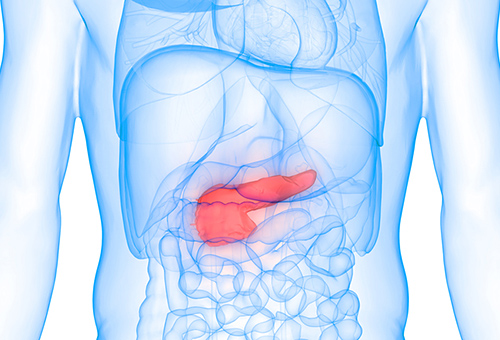
Any type of cancer is a major health concern, but pancreatic cancer is one of the most frightening, with a five-year survival rate of less than 10 percent. The disease is rarely detected until it has progressed, and current treatment options often are not enough to ward off the advancing disease.

Let’s take a step back for a moment and, instead of worrying about what happens once you’re suffering from pancreatic cancer, think about what you might be able to do to reduce your risk of developing this deadly disease in the first place. It could be as simple as a few lifestyle changes.

Researchers analyzed data from the European Prospective Investigation into Cancer and Nutrition (EPIC) cohort, which has tracked more than 500,000 participants from 10 European countries (for 15 years and counting) to investigate how diet, nutritional status, lifestyle and environmental factors, and other variables affect the incidence of cancer and other chronic diseases. Published in the European Journal of Epidemiology, the study on pancreatic cancer risk found that nearly 15 percent of pancreatic cancer cases could have been avoided by making four simple lifestyle changes:

  • Limiting alcohol consumption
  • Adopting a healthy diet
  • Increasing physical activity
  • Maintaining a healthy weight

What’s more, almost 20 percent of cases could have been avoided if, in addition to adopting the above habits, participants also refrained from smoking. That’s five simple lifestyle choices to prevent a deadly disease. Sounds worth it, doesn’t it? So, how many of the above habits do you pursue? One, a few, all five … or none? Talk to your doctor about how to make all five the backbone of your health, wellness and yes, disease prevention routine.

Step Up the Competition

To Your Health
October, 2019 (Vol. 13, Issue 10)

By Editorial Staff

Weight loss is the buzzword in health care that isn’t going away, guaranteed. That’s because too many people want – or need – to lose weight, and permanent, healthy weight loss is often a supreme struggle to attain. We won’t delve into the reasons why it’s such a challenge in this article; instead, let’s explore one way people can overcome those challenges and achieve a healthy weight – and just as importantly, maintain it.

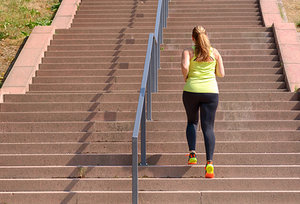
Counting steps is a popular way to ensure you’re staying physically active every day (and burning calories in the process); but participating in competitions designed to increase movement is an even better way, suggests research. Overweight or obese people who participate in step-counting competitions log more steps than people who track their own activity without any competition involved.

In the study, findings from which appear in JAMA Internal Medicine, a journal of the American Medical Association, researchers grouped 602 overweight adults from 40 states into one of three competition arms or a control arm. Members of the competition arms participated in different games designed to inspire more movement; members of the control arm counted steps, but not as part of a competition.

competition - Copyright – Stock Photo / Register Mark

After 24 weeks, competition participants had completed significantly more steps than control participants. Twelve weeks later, they still had significantly increased step counts compared with people in the control group.

The moral to the story: A little competition can go a long way … especially when it comes to physical activity and weight loss. Talk to your doctor to learn more about how you can achieve the healthy body you deserve.

Could Alzheimer’s Start in the Gut?

To Your Health
September, 2019 (Vol. 13, Issue 09)

By Editorial Staff

Alzheimer’s disease is the most common type of dementia among older adults, and it also may be the most troubling.

Whenever brain cells die, causing memory loss and cognitive decline that can progressively take away your ability to perform even the simplest tasks, it’s no laughing matter. Even worse, there is currently no cure – only medication to help manage some of the symptoms.

That’s a pretty bleak picture, but there is good news: research may be getting us one step closer to identifying the potential causes of the disease. Case in point: a study published in EBioMedicine that suggests gut bacteria may play a role. Researchers performed a small pilot study and identified several chemicals produced by GI bacteria were present in study participants suffering from mild cognitive impairment … but not in participants without impairment. What’s more, according to the study these bacterial “signatures” were associated with higher levels of Alzheimer’s disease markers in cognitively impaired subjects.

The study also suggests that dietary changes that improve the gut microbiome and promote healthy bacteria (in the study, they used a modified Mediterranean-ketogenic diet) that may reduce levels of Alzheimer’s markers – both in people with mild cognitive impairment and those without any impairment. Now that’s a potential win-win in the battle against Alzheimer’s!

Can Exercise Overcome the “Obesity Gene”?

By Editorial Staff

It’s undeniable that our increasingly sedentary, technology- and processed-food-based culture is at the heart of the obesity crisis, but there’s also no denying that some people are genetically predisposed to put on the pounds – and have difficulty losing them – compared to others. Put those circumstances together and you’ve got a recipe for obesity disaster in certain individuals.

But here’s the good news: New research suggests specific kinds of exercise may help combat the “obesity gene” and help with weight loss, even in those predisposed to gain it. Published in PLOS Genetics, the study examined five measures of obesity, including body-mass index (BMI), body-fat percentage waist circumference, hip circumference and waist-to-hip ratio; and how various types of exercise impacted those measures. Researchers constructed “genetic risk scores” for each of the measures, reflecting the potential impact of genetics on each measure.

prevention - Copyright – Stock Photo / Register Mark

Among more than 18,000 study participants ages 30-70 who self-reported performing one or more of 18 different types of physical activity on a regular basis, “regular jogging consistently presented the strongest evidence to mitigate the genetic effects on all 5 obesity measures. Moreover, mountain climbing, walking, exercise walking, international standard dancing, and a longer practice of yoga attenuated the genetic effects on BMI. The benefits of regularly performing these 6 kinds of exercise are more impactful in subjects who are more predisposed to obesity.”

Can’t seem to lose the weight (or keep it off)? Talk to your doctor about how these and other exercises can help you get – and stay – on the right track for a lifetime of good health.

Don’t Medicate Your Empathy Away

To Your Health
July, 2019 (Vol. 13, Issue 07)

Don’t Medicate Your Empathy Away

By Editorial Staff

Taking acetaminophen (common brand name: Tylenol, but also found in a variety of multi-ingredient medications including Excedrin) may make you feel less pain (although it won’t address the cause of your pain), but it also may blunt your feelings in general, particularly empathy: the ability to feel or understand what another person is experiencing from their point of view, without the person having to tell you.

Empathy is an important quality because if you have it, it’s hard to be selfish. After all, it means you’re considering someone else’s experience, feelings, emotions, etc., not just your own. Someone else actually matters, and that’s always a good thing in our increasingly me-centered world.

In a recent study involving 114 college students, researchers showed positive scenarios (a man proposing to his girlfriend, a woman getting a raise at her job, a woman’s father coming to her music recital, etc.) to students after administering either 1,000 mg of acetaminophen or an inactive pill (placebo).

Students who took acetaminophen experienced less pleasure and empathetic feelings toward the hypothetical characters in the scenarios compared with students who did not take acetaminophen, assessed by various tools that measured perceived positivity, perceived pleasure, personal pleasure and “other-directed” empathetic feelings: the extent to which the participants felt sympathy, warmth, compassion, etc., based on the scenario viewed.


Published in Frontiers in Psychology, the study found that while acetaminophen use did not significantly reduce perceived positivity or perceived please, it did reduce personal pleasure and empathetic feelings compared to placebo.

So, is reducing your pain important enough to reduce your ability to feel or understand anyone else’s pain? We hope not, particularly when there are an abundance of nondrug methods available – such as chiropractic care – to combat back, neck, headache and various other types of pain. This also isn’t the first time acetaminophen has been associated with a negative health outcome (click here for a recent example), which makes drug-free pain relief all the more important to your overall health and wellness. Talk to your doctor for additional information.

Road Map for the Healthy Child

To Your Health
May, 2019 (Vol. 13, Issue 05)

Road Map for the Healthy Child

By Editorial Staff

As adults, most people realize how much their childhood experiences, good, bad and everything in between, influenced who they are today. Sometimes the seeds are planted early in life – even during the first few years.
Of course, that doesn’t mean parents know how to raise their own children the right way, even with the best intentions. Even the best parent needs assistance, guidance – a road map, if you will – to help get their children on course for optimal health and wellness.

Enter the World Health Organization (WHO), an agency of the United Nations devoted to public health. The WHO recently released its very first Guidelines on Physical Activity, Sedentary Behaviour and Sleep for Children Under 5 Years of Age. The guidelines, based on a scientific review of the available research, recommend the following (per day):

Children Younger Than Age 1

Physical Activity: Active several times a day in a variety of ways, including at least 30 minutes of tummy time
Screen Time: Not recommended; reading and storytelling by parents encouraged
Sleep: 14-17 hours, including naps


Children Ages 1-2

Physical Activity: 180 minutes or more; children should not be restrained (sedentary) for more than one hour at a time
Screen Time: Not recommended for 1-year-olds; one hour or less for 2-year olds; reading and storytelling by parents encouraged
Sleep: 11-14 hours, including naps; consistent sleep and wake times

Children Ages 3-4

Physical Activity: 180 minutes or more, at least 60 of which involve moderate- to vigorous-intensity activity (frequent running, jumping, etc.).
Screen Time: One hour or less; reading and storytelling by parents encouraged
Sleep: 10-13 hours, including a nap; consistent sleep and wake times

If you have a young child, how closely are you adhering to the WHO guidelines? If your child is older, did you come close to meeting the guidelines … or were you not even close? As the body of research supporting the benefits of physical activity, high-quality sleep and limited screen time grows ever-larger, these guidelines are a reminder for parents of young children – and children / adults of all ages – that simple lifestyle behaviors can make a big difference when it comes to health and wellness.

Chiropractic for Low Back Pain: Your Best, First Recommendation

To Your Health
April, 2019 (Vol. 13, Issue 04)
|

Chiropractic for Low Back Pain: Your Best, First Recommendation

By Editorial Staff

Numerous studies have shown chiropractic spinal manipulation is effective for low back pain, which is good news considering you only have a small chance of avoiding LBP during the course of your lifetime. In fact, it’s estimated that at least eight in 10 people will suffer low back pain at some point, many of whom will experience it on multiple occasions or even chronically.

Now here’s even better news: Evidence suggests chiropractic spinal manipulation is as effective as commonly recommended treatment options such as pain medication for LBP, which should make it your best, first recommendation, particularly in light of the prescription opioid crisis killing more than 100 Americans a day.

In a new review study, published in the British Medical Journal, researchers evaluated findings from 47 previous investigations involving more than 9,000 men and women (average age: 35-60 years). All studies compared the value of spinal manipulative therapy with recommended therapies including nonsteroidial anti-inflammatory drugs (NSAIDs; Aleve, Motrin, etc.), prescription painkillers and exercise. Spinal manipulation relieved LBP as effectively as the recommended therapies and was actually more effective in improving short-term function.

awesome - Copyright – Stock Photo / Register Mark

Spinal manipulation still isn’t routinely recommended as a primary treatment for low back pain, despite evolving guidelines in the U.S. and worldwide. The opioid epidemic has opened eyes to the need for safer pain-relief options, but so far, the recommendations don’t go far enough. Why take pain medication and risk the side effects, some of which can be life-threatening, when you can enjoy the benefits of chiropractic spinal manipulation and achieve the same pain relief and functional improvements? Talk to your doctor to learn more.